

Freight Emissions Reporting and Why Better Carrier Data Matters
Price, capacity and delivery performance still matter when companies evaluate transportation providers. But some shippers are now asking another question: Can your carrier provide reliable emissions data?
Freight transportation can contribute to a company’s indirect greenhouse gas emissions, yet the U.S. Environmental Protection Agency notes that businesses often have difficulty obtaining the data needed to report emissions associated with freight movement. For companies with formal sustainability goals, international operations or customer reporting requirements, that information is becoming increasingly useful.
ETI Trucking has experienced that shift firsthand. As requests for emissions information increased among pharmaceutical and international logistics customers, ETI needed a better way to turn existing fleet information into consistent, customer-ready reporting. A recently published Geotab case study documents what happened next. By combining fleet data already collected through Geotab with GreenIRR emissions reporting, which is independently assured by SCS Global Services, ETI reduced the work required to prepare emissions reports by 99 percent while also identifying measurable improvements in fuel use and fleet emissions.
What Is Freight Emissions Reporting?
Freight emissions reporting measures and documents greenhouse gas emissions associated with transporting goods. Carriers can use information such as fuel consumption, mileage and vehicle performance to measure fleet emissions, while shippers can use transportation data to better understand emissions associated with moving products through their supply chains.
Freight emissions information can help companies:
- Measure transportation-related environmental impact
- Track changes over time
- Evaluate carrier performance
- Support sustainability reporting
- Complete transportation RFP requirements
- Identify opportunities to improve freight efficiency
EPA SmartWay specifically identifies freight transportation as a potentially significant source of indirect emissions and encourages collaboration between shippers and carriers to improve transportation efficiency and emissions reporting.
Why Are Shippers Asking Carriers for Emissions Data?
The answer varies by customer. For some organizations, emissions information supports internal sustainability goals. Others need transportation data for customer reports, procurement requirements or broader greenhouse gas accounting.
For ETI, the need became particularly apparent as its pharmaceutical and international logistics business grew. According to Geotab’s case study, emissions reporting increasingly appeared in customer RFP requirements, including those involving pharmaceutical and EU-regulated supply chains.That changes the role transportation data can play in carrier selection.
Industry data supports this trend: according to the 2025 State of Transportation Report, 87 percent of transportation RFPs now include a sustainability component.
A shipper may want to know:
- Can the carrier provide repeatable emissions information?
- How is the information calculated?
- Can results be compared from one reporting period to another?
- Can the information be supplied for an RFP?
- Is the carrier using its fleet data to identify inefficiencies?
The goal is not simply to produce another report. Useful data gives customers greater transparency into a portion of their supply chain that can otherwise be difficult to measure.
What Is the Difference Between Scope 1 and Scope 3 Freight Emissions?
The distinction depends on whose greenhouse gas inventory is being considered.
| Perspective | How Transportation Emissions May Be Reported |
|---|---|
| Carrier operating its own vehicles | Fuel consumed by vehicles owned or controlled by the carrier generally contributes to the carrier’s direct Scope 1 emissions. |
| Company purchasing transportation services | Emissions from third-party freight transportation may contribute to the company’s indirect Scope 3 emissions, depending on the activity and the company’s reporting boundaries. |
The same transportation activity can therefore appear differently in the emissions inventories of the carrier and the customer hiring that carrier. Under the GHG Protocol, purchased third-party transportation services can fall within Scope 3 reporting. The framework includes both upstream and downstream transportation categories depending on the nature of the freight activity and who purchases the transportation service. This helps explain why a shipper may ask a carrier like ETI for emissions information. Data about the carrier’s direct fleet activity can help customers better understand the transportation portion of their own supply-chain footprint.
How ETI Turned Existing Fleet Data Into Customer-Ready Reporting
ETI did not start from scratch. The company has used Geotab since 2016 for fleet tracking, compliance and driver visibility. That system already collected information related to vehicle diagnostics, driver behavior, ELD compliance and fleet performance. The challenge was turning existing operational information into consistent emissions reporting without creating another labor-intensive administrative process.
ETI integrated GreenIRR with its existing Geotab data. GreenIRR translates the operational fleet information into emissions outputs, fuel-efficiency trends and emissions-intensity reporting. The result was a reporting process that could be used more readily for customer requests and RFPs.
| Measurement | Result Reported by Geotab |
|---|---|
| Emissions reporting workload | 99% reduction |
| Previous reporting workload | Approximately 30 hours per quarterly cycle |
| Scope 1 emissions | 3.1% reduction year over year |
| Fuel spending | 2.8% reduction year over year |
| Customer reporting | Standardized reporting aligned with recognized frameworks |
Geotab also reported that ETI maintained an above-average emissions rating during 2025 compared with a benchmark of more than 3,000 fleets. These improvements matter because they demonstrate two different uses for fleet data. One is reporting what happened. The other is finding opportunities to operate more efficiently going forward.
How Can Fleet Data Improve Freight Efficiency?
Emissions reporting becomes more useful when the underlying information also helps a carrier identify operational inefficiencies.
Fleet data can provide insight into areas such as:
- Fuel economy
- Excessive idling
- Vehicle performance
- Driver behavior
- Maintenance needs
- High-consumption vehicles
- Miles traveled
- Equipment utilization
In ETI’s case, Geotab provides the underlying operational fleet information while GreenIRR produces monthly efficiency reporting that can identify underperforming assets based on fuel economy. ETI can then investigate those vehicles before the inefficiency spreads across a larger portion of the fleet. That creates a practical connection between emissions reporting and day-to-day transportation operations.
Reducing unnecessary fuel consumption can lower emissions, but it can also reduce operating waste and help identify equipment that is not performing as expected. ETI’s documented 2.8 percent year-over-year reduction in fuel spending alongside its 3.1 percent reduction in Scope 1 emissions shows how those goals can work together.
What Should Shippers Ask a Carrier About Emissions Reporting?
Companies that need freight emissions information should understand what their transportation providers can actually deliver. Here are several useful questions to ask.
Can You Provide Carrier-Specific Emissions Data?
Industry averages may help with estimates, but customers with more detailed reporting requirements may need information based on the transportation provider’s actual fleet activity.
How Is the Information Calculated?
Ask what operational data is used and whether the reporting follows a consistent methodology.
How Often Can Reports Be Provided?
Annual information may work for some companies, while others may require quarterly, monthly or RFP-specific reporting.
Is the Reporting Consistent From One Period to the Next?
Consistency makes it easier to identify whether performance is improving, declining or remaining relatively stable.
Can the Information Support an RFP or Customer Request?
A sustainability requirement becomes much easier to manage when the carrier can provide standardized documentation rather than assembling information manually each time a customer asks.
Does the Carrier Use the Data to Improve Fleet Performance?
Reporting alone describes past activity. Operational use of the data can help identify unnecessary fuel consumption, equipment problems and other opportunities for improved efficiency.
EPA SmartWay similarly encourages shippers to consider carrier environmental performance when evaluating transportation choices and to use freight data to identify opportunities for reducing emissions.
Is the Reporting Independently Verified?
Third-party assurance adds a layer of credibility that self-reported data cannot provide. Independently verified emissions data carries more weight in formal sustainability disclosures, customer audits and investor reporting.

Why Freight Efficiency Matters Beyond Sustainability
Not every company asking about transportation efficiency is doing so for the same reason. For one shipper, the priority may be greenhouse gas reporting. For another, it may be reducing unnecessary transportation costs. For a pharmaceutical company, reliable documentation may be part of an RFP or customer requirement. For a manufacturer, efficient fleet operation may simply be another indicator that a transportation partner is actively managing its equipment and operations. Better fleet information can support all of these objectives.
This is why ETI’s experience with emissions reporting is relevant beyond a sustainability initiative. The same fleet data used to document environmental performance can help identify vehicle inefficiency, monitor fleet performance and improve operating decisions.
Freight Transportation Across Pennsylvania, New Jersey and New York
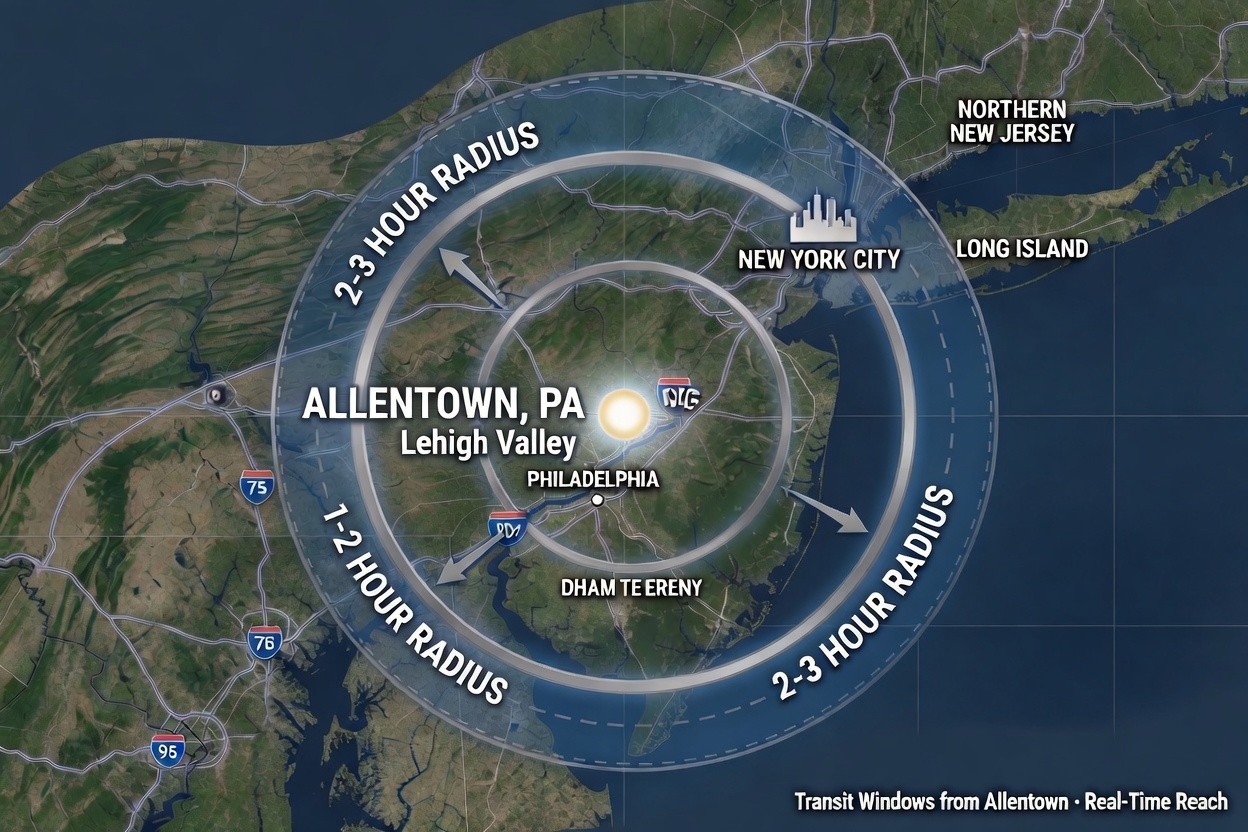
ETI is based in Allentown, Pennsylvania and has provided transportation services since 1977. Its fleet handles shipments ranging from small packages to full truckload freight using vans, straight trucks, tractor-trailers and temperature-controlled equipment. Geotab identifies ETI as a regional life sciences and clinical trial carrier operating primarily across the JFK, Newark and Philadelphia freight corridors. The company supports transportation where delivery timing, temperature control and chain-of-custody documentation can be critical.
That location places ETI within a major Northeast transportation network connecting Pennsylvania, New Jersey and New York with airports, ports, pharmaceutical operations, manufacturing facilities and distribution centers. As customer reporting requirements continue to evolve, reliable transportation increasingly involves both moving freight and providing useful information about how that freight moves.
ETI’s Geotab Case Study Shows the Value of Better Transportation Data
Geotab published its ETI case study on August 20, 2026, documenting how the carrier transformed existing telematics information into standardized emissions reporting.
The most significant result may not be any single percentage. ETI can now provide customers with information that previously required approximately 30 hours of manual work each quarter. The company can also use the underlying fleet data to identify operating inefficiencies and better understand its own performance. As Brandon Sauers, ETI Vice President and incoming CEO, explained in the Geotab case study, customers increasingly want transparency into the environmental impact associated with moving their freight. For ETI, providing that transparency has become another part of being a dependable transportation partner.
Read the full Geotab case study to learn how ETI, Geotab, GreenIRR and Assured Telematics turned existing fleet information into measurable operational and reporting improvements. GreenIRR is available through Geotab’s Marketplace as an Order Now partner, meaning any fleet already using Geotab can begin emissions reporting without installing additional hardware.
Talk With ETI About Your Transportation Requirements
Transportation requirements continue to become more detailed. Delivery time, equipment, temperature control, tracking, documentation and now emissions information can all factor into how companies evaluate freight providers. ETI provides dedicated transportation and logistics services from Allentown, Pennsylvania throughout the Northeast and beyond. If your organization has specialized transportation, reporting or logistics requirements, contact ETI to discuss your shipment.
Frequently Asked Questions About Freight Emissions Reporting
What is freight emissions reporting?
Freight emissions reporting measures greenhouse gas emissions associated with transporting goods. Transportation providers may use fuel consumption, mileage, vehicle and telematics information to calculate fleet emissions and provide customers with data about freight-related environmental impact.
Why do shippers ask carriers for emissions data?
Shippers may need carrier emissions information for corporate sustainability reporting, customer requirements, transportation RFPs, supply-chain emissions accounting or carrier performance evaluation.
What are Scope 1 transportation emissions?
Scope 1 emissions are direct greenhouse gas emissions from sources owned or controlled by a company. For a trucking carrier operating its own diesel vehicles, fuel combustion from those vehicles generally contributes to the carrier’s Scope 1 emissions.
Can trucking emissions be part of a shipper’s Scope 3 emissions?
Yes. When a company purchases transportation from a third-party carrier, emissions associated with that transportation may be included within the company’s Scope 3 inventory, depending on the activity and applicable reporting category.
What information can be used to measure freight emissions?
Depending on the reporting method, transportation emissions calculations may use information such as fuel consumption, mileage, vehicle type, fuel type, freight activity and fleet-performance data.
Can freight emissions reports be used in transportation RFPs?
Yes. Some companies now request carrier emissions information as part of transportation procurement and RFP processes. Geotab reports that ETI provides standardized emissions reporting particularly for pharmaceutical and EU-regulated customers with disclosure requirements.
How can better fuel efficiency reduce freight emissions?
Using less fuel to perform transportation work generally reduces fuel-related greenhouse gas emissions. Fleet information can also help carriers identify excessive fuel consumption or poorly performing equipment.
Does ETI provide emissions information to customers?
Yes. According to Geotab’s 2026 case study, ETI now provides standardized sustainability reports for customers and uses the reporting capability to support transportation RFPs requiring emissions information.