

Not every hot shot driver needs an electronic logging device. An ELD is generally required when a driver operates a qualifying commercial motor vehicle in interstate commerce and must maintain records of duty status, unless a short-haul or another specific exception applies.
Even when a driver qualifies for an ELD exception, federal or state hours-of-service rules may still govern how long that driver can remain on duty and operate the vehicle. For shippers, the most important takeaway is simple:
“An urgent shipment does not override a commercial driver’s legal driving limits.”
Hot Shot ELD Requirements at a Glance
Question and Quick Answer
Do all hot shot drivers need an ELD?
No. The requirement depends on the vehicle, route, type of operation and whether an exception applies.
Can a non-CDL hot shot driver need an ELD?
Yes. CDL and ELD requirements use different criteria.
Can an urgent hot shot load run straight through?
Sometimes, but only when the driver has enough legally available driving time.
Does an ELD exception eliminate driving limits?
Not necessarily. A driver may be exempt from using an ELD but remain subject to hours-of-service rules.
Do short-haul drivers need ELDs?
Qualifying short-haul drivers may use time records instead of ELDs when every condition of the exception is met.
Can a revoked ELD interrupt a shipment?
Yes. Continued use after the replacement deadline may result in citations and the driver being placed out of service.
What Is an Electronic Logging Device?
An electronic logging device, commonly called an ELD, records a commercial driver’s driving time and supports the driver’s record of duty status.
The device documents when a driver is:
- Driving
- On duty but not driving
- Off duty
- Using a sleeper berth
Most interstate commercial drivers who are required to maintain records of duty status must use an ELD that meets Federal Motor Carrier Safety Administration requirements, unless they qualify for an exception. An ELD does not decide whether a shipment is urgent, nor does it prevent a carrier from offering expedited transportation. It helps document whether the assigned driver has enough legally available time to complete the trip.
ELD, Hours of Service and CDL Requirements Are Different
| Requirement | What It Governs | What Shippers Should Understand |
|---|---|---|
| ELD | How driving and duty time are recorded | An ELD documents the driver’s hours. It does not create additional driving time. |
| Hours of Service | How long a driver may drive and remain on duty | A time-critical shipment does not allow a driver to exceed legal limits. |
| CDL | Whether the driver needs a commercial driver’s license for the vehicle or operation | A driver may not need a CDL but may still be subject to federal safety, hours-of-service and ELD rules. |
This distinction is especially important in hot shot trucking because many loads move in pickup trucks, cargo vans, straight trucks or pickup-and-trailer combinations rather than conventional tractor-trailers. The size or appearance of the vehicle does not determine whether federal rules apply.
When Do Federal Hours-of-Service Rules Apply to Hot Shot Trucking?
Many hot shot operations are subject to the Federal Motor Carrier Safety Regulations. For interstate transportation, a truck or truck-and-trailer combination may be considered a commercial motor vehicle when its gross vehicle weight rating, gross combination weight rating, gross vehicle weight or gross combination weight reaches 10,001 pounds or more.
The greater of the applicable ratings or actual weights is used. Other operations may also fall under federal requirements, including vehicles transporting hazardous materials in quantities that require placards.
The Combined Vehicle Rating Matters
A pickup truck and trailer can each have an individual rating below 10,001 pounds while their combined rating exceeds the federal threshold. For example, a truck with a gross vehicle weight rating below 10,001 pounds may tow a trailer that is also rated below 10,001 pounds. If the combined rating reaches 10,001 pounds or more, the interstate operation may be subject to the Federal Motor Carrier Safety Regulations.
Shippers should not assume that federal rules do not apply merely because an urgent load is moving in a pickup truck rather than a tractor-trailer.
Does a Non-CDL Hot Shot Driver Need an ELD?
Possibly.
A commercial driver’s license is generally associated with heavier commercial vehicles, certain passenger vehicles and vehicles transporting placardable quantities of hazardous materials. ELD requirements are tied to whether the driver must maintain records of duty status under hours-of-service regulations. That means a driver can operate a vehicle that does not require a CDL while still being subject to:
- Federal motor carrier safety regulations
- Hours-of-service limits
- Record-of-duty-status requirements
- Electronic logging requirements
Describing a hot shot operation as “non-CDL” does not automatically mean the driver can operate without an ELD or continue driving until the delivery is completed.
What Hours-of-Service Rules Affect Hot Shot Deliveries?
The principal federal hours-of-service limits for most property-carrying commercial drivers include the following.
11-Hour Driving Limit
A property-carrying commercial driver may generally drive for a maximum of 11 hours after receiving at least 10 consecutive hours off duty. This does not mean every driver has 11 hours available when a hot shot shipment is assigned. The driver may have already used part of the available driving time before reaching the pickup location.
14-Hour Driving Window
A driver may not drive beyond the 14th consecutive hour after coming on duty following the required off-duty period. The 14-hour rule is a duty window, not permission to drive for 14 hours. Loading, inspections, fueling, waiting at the shipper and other on-duty activity can consume part of that window.
30-Minute Driving Break
A driver generally must take a break of at least 30 consecutive minutes after eight cumulative hours of driving without a qualifying interruption. The break may be satisfied by a consecutive non-driving period that meets federal requirements.
60- or 70-Hour Limit
A driver may not drive after accumulating 60 hours on duty during seven consecutive days or 70 hours during eight consecutive days, depending on the motor carrier’s operating schedule. A driver might have time remaining in the current 14-hour window but still be unable to accept another shipment because of hours accumulated during the previous seven or eight days.
Can an Urgent Hot Shot Load Run Straight Through?
Sometimes, but not in every situation.
Hot shot trucking usually provides a dedicated vehicle that moves freight directly from pickup to delivery without consolidating it with other customers’ shipments. That can eliminate terminal transfers and reduce unnecessary handling.
However, direct transportation does not mean the driver is exempt from required breaks or rest periods.
Whether one driver can complete the delivery depends on:
- The driver’s available hours when dispatched
- The distance to the pickup location
- The distance from pickup to delivery
- Time spent waiting for the shipment
- Loading and securement requirements
- Traffic, weather and road conditions
- The receiving facility’s hours
- The driver’s cumulative weekly hours
- Whether the operation qualifies for an exception
- Whether another driver or transportation plan is needed
Consider a manufacturer that needs a replacement component transported several hundred miles to prevent a production shutdown.
A vehicle may be close to the pickup, but its driver may have only a limited number of legal driving hours remaining. Another vehicle located farther away with a fully rested driver may provide the more dependable solution.
The closest available truck is not automatically the truck most capable of meeting the delivery deadline.
Need to Know Whether an Urgent Delivery Schedule Is Realistic?
ETI Trucking can review the pickup location, delivery deadline, shipment dimensions and transportation requirements to help identify an appropriate dedicated solution.
A dependable delivery plan should account for legal operating limits before the shipment is dispatched—not after the driver is already on the road.
Do Short-Haul Hot Shot Drivers Need ELDs?
Qualifying short-haul drivers may operate without an ELD when they satisfy every condition of the applicable federal short-haul exception.
Under the general short-haul exception, a qualifying driver must:
- Operate within a 150-air-mile radius of the normal work-reporting location
- Report to and return to the normal work-reporting location
- Complete the duty period within 14 consecutive hours
- Have the motor carrier maintain the required time records
Drivers who meet the exception are not required to prepare standard records of duty status and therefore are not required to use an ELD for those qualifying operations.
However, the short-haul exception does not permit unlimited driving. The driver must continue to comply with applicable driving and duty limits.
The exception may not apply when an urgent shipment:
- Takes the driver beyond the permitted radius
- Prevents the driver from returning to the normal reporting location
- Extends the duty period beyond 14 consecutive hours
- Otherwise fails to meet one of the exception’s conditions
A route should not be described as short haul based only on how it appears on a map.
What Other ELD Exceptions May Apply?
FMCSA identifies several limited exceptions to the electronic logging requirement.
Drivers Who Use Paper Logs Infrequently
A driver who must maintain records of duty status no more than eight days during any 30-day period may qualify to use paper logs instead of an ELD on those days.
Vehicles Manufactured Before Model Year 2000
Drivers operating qualifying vehicles manufactured before model year 2000 may be exempt from the ELD requirement. They may still be required to maintain paper records of duty status.
Certain Driveaway-Towaway Operations
A driveaway-towaway exception may apply when the vehicle being driven is itself the commodity being delivered or in certain qualifying recreational vehicle operations. These are specific exceptions. They should not be interpreted as broad exemptions for ordinary hot shot freight.
An ELD Exception Is Not Always an Hours-of-Service Exception
This is one of the most important distinctions for shippers to understand. An ELD is a method of recording a driver’s duty status. Hours-of-service regulations determine how long the driver may legally drive and remain on duty. A driver who qualifies to use paper logs instead of an ELD may still be subject to:
- The 11-hour driving limit
- The 14-hour duty window
- Required driving breaks
- The applicable 60- or 70-hour cumulative limit
Similarly, a short-haul driver may be exempt from preparing a standard log but must remain within the conditions of the short-haul exception. The absence of an ELD in a vehicle does not automatically indicate that an operation is noncompliant. It also does not mean the driver has unlimited operating time.
FMCSA Removed 10 ELDs From Its Registered List in July 2026
On July 9, 2026, FMCSA removed 10 electronic logging devices from its registered-device list because the providers failed to meet the agency’s minimum requirements. Motor carriers using the revoked devices must replace them with compliant registered ELDs before September 8, 2026.
Beginning September 8, carriers that continue using the revoked devices will be considered to be operating without an ELD. Safety officials who encounter a driver using one of the devices may issue a citation and place the driver out of service under the applicable enforcement criteria. For shippers, the announcement illustrates why ELD compliance is more than an administrative concern. A driver who is placed out of service may be unable to continue a time-sensitive delivery. That can affect:
- Production schedules
- Installation appointments
- Aircraft-on-ground shipments
- Pharmaceutical deliveries
- Replacement-part transportation
- High-value equipment deliveries
- Customer commitments
Motor carriers should monitor FMCSA notices and confirm that the devices used in their operations remain on the agency’s registered list.
What Happens If a Driver’s ELD Malfunctions?
An ELD malfunction is different from using a device that has been removed from FMCSA’s registered list. When an ELD malfunctions, the driver must notify the motor carrier within 24 hours. The carrier generally has eight days to repair, service or replace the device. When the malfunction prevents the ELD from accurately recording or displaying hours-of-service information, the driver must use paper logs or another permitted method during the repair period.
A carrier should have a process for addressing a malfunction without losing accurate duty-status records or creating an avoidable disruption.
How ETI Plans a Time-Critical Hot Shot Delivery
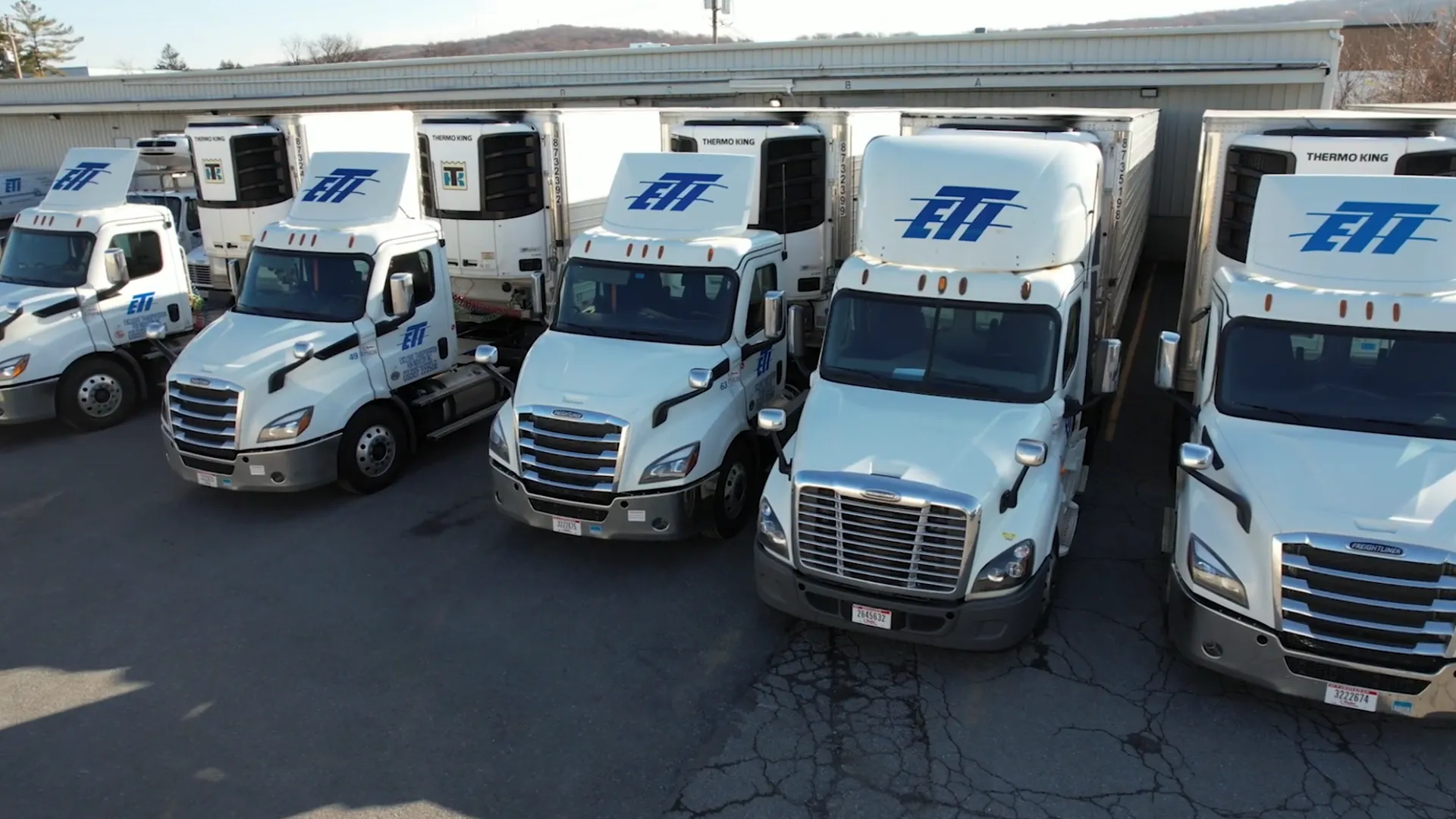
ETI Trucking was founded in Allentown, Pennsylvania, in 1977 as a hot shot delivery service for emergency, same-day pickups and deliveries.
ETI provides exclusive-use transportation with an appropriate dedicated vehicle and qualified driver. Because the shipment is not consolidated with other customers’ freight, it can move directly from pickup to its destination without unnecessary terminal handling. ETI operates 24 hours a day, 365 days a year to support emergency and time-sensitive shipping needs. Contact us at 866-SHIP-ETI for any assistance.
ETI Trucking
2202 26th St SW, Allentown, PA 18103
Service area: PA, NY, NJ, MD, CT, NH, ME